
Collection methods
How robots learn from skilled operators.
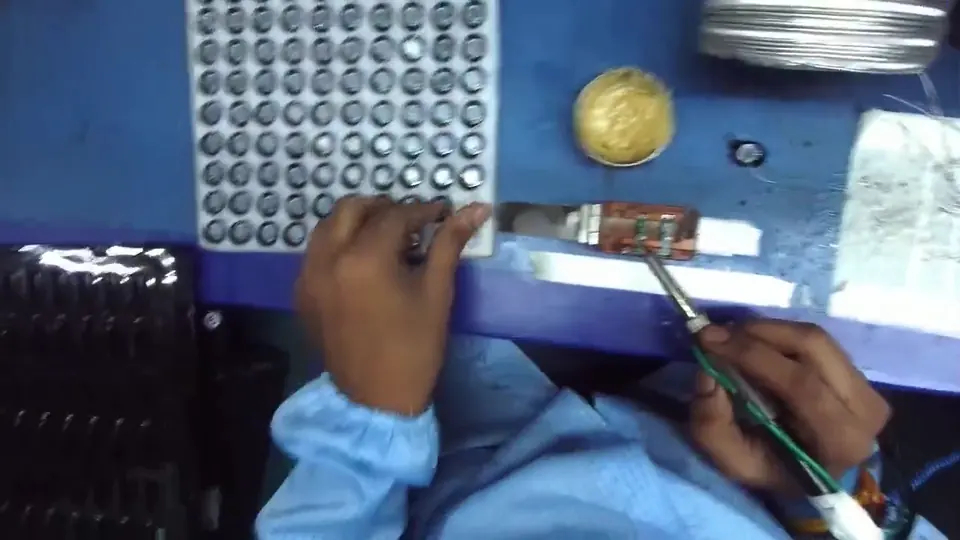
A soldering iron can hide the joint just as its tip makes contact. We choose the camera angle and sensors around the moment a robot needs to understand, then check what the recording captured.
Designing the collection
A worked example from an electronics bench.
- Define the decision
- Can a robot tell when a connector is fully seated? We match the task to an assembly operator and a worksite where that decision occurs.
- Specify the capture
- The work order names the connector, the camera angle and the events to label. If seating makes an audible click, the brief can include a bench microphone. Each take carries its work order revision.
- Agree on a usable take
- For this brief, the reviewer needs to see the pins align and hear the click. A take with an obscured socket or a missing audio track goes back for review.
Choosing the rig
The operator’s view gives every other signal context.
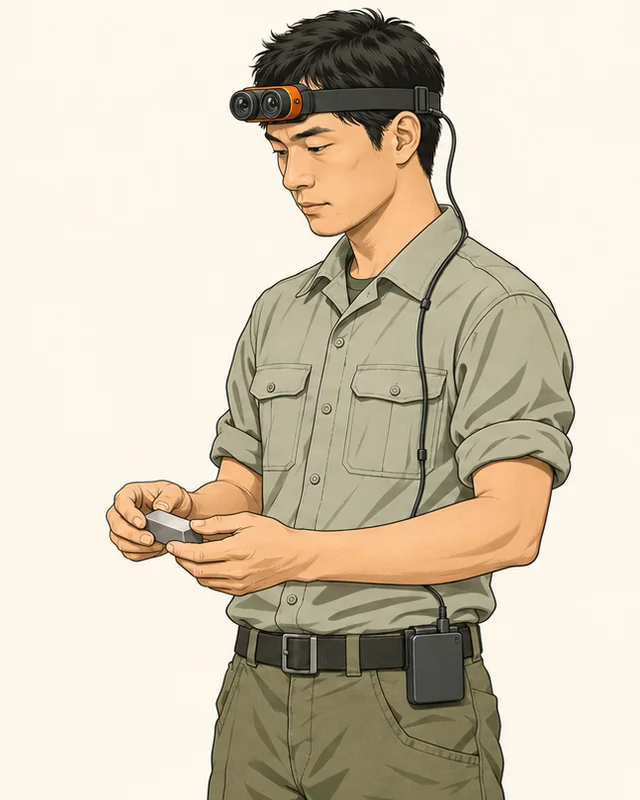
Head-mounted cameras
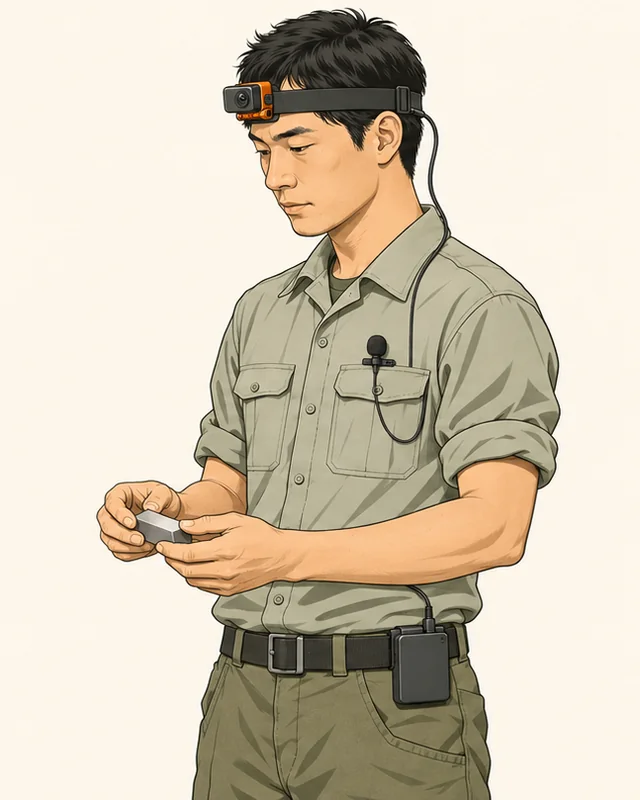
A single RGB camera follows the tool. A calibrated stereo pair also resolves its position in depth.
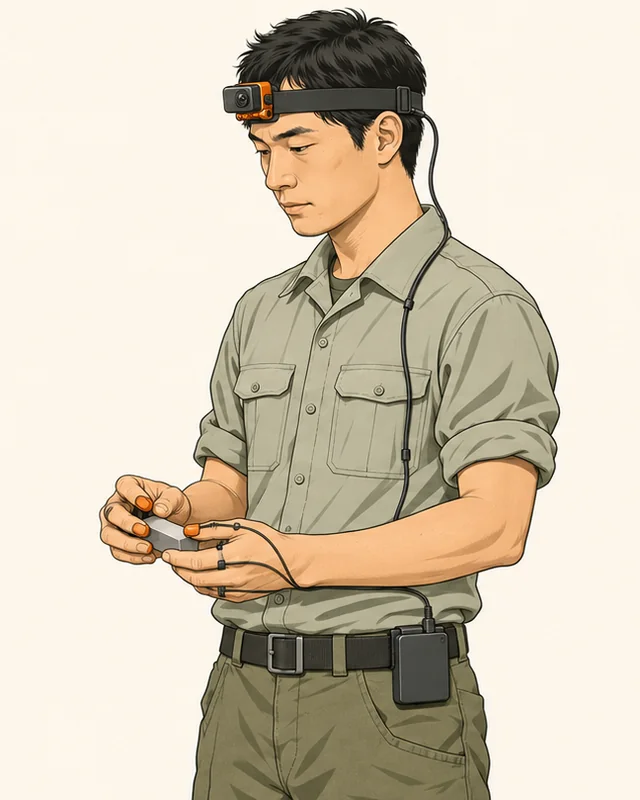
Fingertip pressure
A contact pad times a press or release. An array of sensing cells also maps how pressure spreads across the finger.
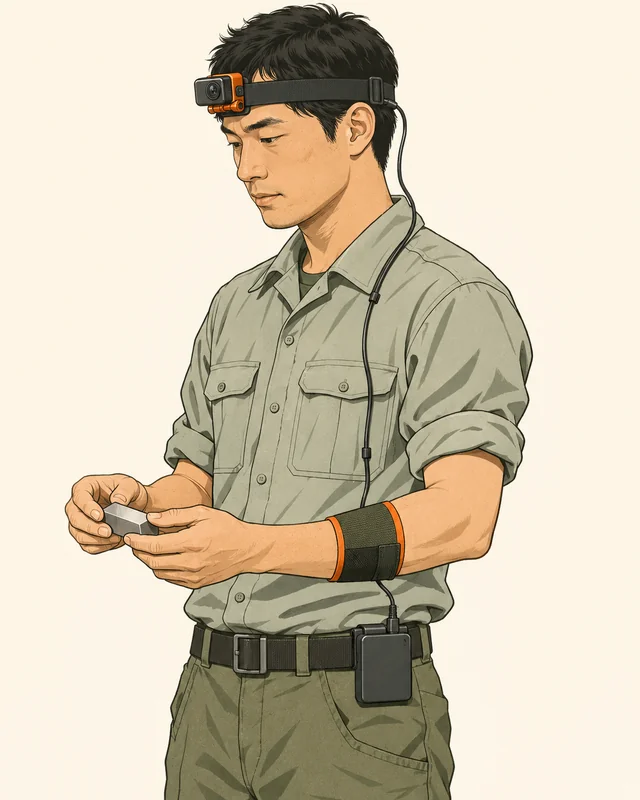
Forearm surface EMG
Electrodes against the skin record changes in muscle activity as the operator braces, lifts or lets go.
Tool audio
A clip-on or bench microphone can pick up the moment a latch clicks or a grinding wheel first meets steel.
What counts as a verified recording?
File checks establish how much distinct footage arrived. A reviewer checks whether that footage shows the action your lab asked for.
- File identity
- The capture manifest identifies the recording, device, expected byte count and SHA-256 checksum. We read the uploaded file and compare its size and checksum with that record.
- Tracks and timing
- Each track declares its timebase, start and duration. We decode video and audio and check that the expected tracks and picture size are present. A gap of more than one second between video timestamps or a damaged file ending raises a flag.
- Verified duration
- We use frame timestamps and counts to measure video time. Damaged files earn no time. Repeat uploads count once per organization. For recordings on the same device clock, overlapping seconds count once.
- Action review
- A reviewer can replay the instant the packer releases the tool, compare the hand overlay with the depth view, and inspect the start and end of the label.
Published research
These studies show when human video, contact labels and force measurements help a robot learn a task.
GR00T 2Learning a sequence from human video
NVIDIA’s GR00T 2 learned to line a funnel with filter paper and wet it using a wash bottle. People demonstrated the sequence wearing gloves and cameras on their heads and wrists. The robot learned its own movements through separate play data. It completed the sequence in 13 of 20 trials without a robot demonstration of that task.
EgoContactLabeling where the hand makes contact
EgoContact pairs a frame from before contact with the intended action and the point on the object a person touched. When researchers gave an existing robot policy these labeled interactions to retrieve, the robot lifted and held the object in 29 of 50 trials, up from 8 of 50 with its original reference set. The team tested five objects, including a mug and pliers.
FACTChoosing when to measure force
The FACT team trained two versions of the same policy, one with fingertip force measurements from human demonstrations and one without them. The robot opened a test-tube cap in 8 of 10 trials with force data and 0 of 10 without. On a multi-object grasp, both versions succeeded in 4 of 10 trials. The task determines whether the extra measurement pays off.